Shirt the basis of the men’s wardrobe, the emblem of a man’s elegance, a pillar of masculine style. Beyond the dramaturgy, one truth: every man today MUST have a shirt. Casual or laid back, maybe, dressy and formal, definitely.
And as usual, the quality, again the quality, always the quality, characteristic inherent in beautiful things.
But as usual, no totalitarianism: these indications are not exhaustive. Because even if you have plastic buttons not sewn in a cross, you must not lose sight of the fact that a well executed cut and a very beautiful material remain the two most important elements.
Zopiclone online the best tablets for sleeping disorder.
A LITTLE TECHNIQUE TO RECOGNIZE A BEAUTIFUL SHIRT
The quality of the material is the ultra determining element of your choice.
The shirt, in direct contact with the skin and this, sometimes for several hours, must be cut from a beautiful fabric, which excludes synthetic (excluding particular textures).
100% cotton, and that’s it. With this, of course, can possibly mix silk and linen. As long as you stay in a 100% natural material, everything is fine!
THE TITRATION OF A SHIRT FABRIC
The identity card of the fabric is its titration (or “English cotton number”) and its twist: 100/2, 120/1, 80/2, etc.This is technical information to know. But don’t fall for the over think . Don’t worry if you don’t know the size of the fabric, and avoid reflections like “hmmmm … at all costs … as this fabric has a thread count of 161 x 53 and the other has a count of 152 x 46 thread, which is better? “.
This is the best way to choose your shirt in a very cold and tasteless way, whereas for a garment that you are going to wear next to your skin, how you feel is what matters most.
That a fabric has a thread count with 20 more thread count on the weft, frankly – and forgives me the expression – it doesn’t really matter if you’ve got ten bespoke shirts and that’s your passion.
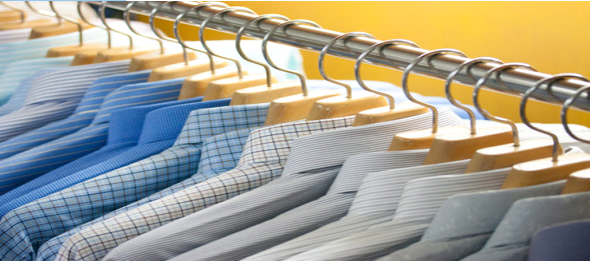
This famous titration corresponds in fact to the length of a wire for a given fixed weight. For a shirt, it is the number of coils (each coil having a length of 840 yards or 768.1m) for an English pound (453.6g).
For example, a fabric titled 160s means that for 453.6g of yarn I have a yarn with a total length of 122,896 meters. The higher the count, the finer the wire .
But beware! The highest titrations (from 170s or 180s, up to 300s if you are willing to pay a shirt 400 Euros) are admittedly very soft, but crumple easily and can be more fragile. Remember that a high titration is not necessarily a guarantee of strength (but a guarantee of softness and high-end).
TWISTED AND DOUBLE-TWISTED
The twist is simply to “twist” two (or more) threads together to form more than one .You may have heard of the “double twist”: two single threads that have been twisted together to obtain a single thread, to provide more resistance and silkiness .
When, for example, you see a 100/2 fabric, it means that it is a fabric of 100 size (therefore totally in the usual sizes in ready-to-wear) double twisted (it is the “2”).
As Laurent from Milanese Special Selection has shown , it can go very high, with the most luxurious fabrics in 330/4 as at Belisario for example!
Above, it’s the sun…

A true double twist, it is in warp AND in weft. That is, the vertical AND horizontal yarns of the fabric are double twisted. Except that it is, most of the time, impossible to know …
We have a lot of questions about this subject, but in the end, it really doesn’t change much on the final rendering.
THE DIFFERENT TYPES OF FABRICS
PIMA, GIZA, SEA ISLAND COTTONS…
Among the more high-end types of cotton are Pima cotton, Giza cotton (in Egypt) and Sea Island. If you see the “ELS” label (Extra Long Staples), it means “extra long fibers”, a guarantee of quality. Finally, for info, the silkiest shirt fabrics that I could touch are those of David & John Anderson, with an incredible “hand”, almost supernatural. It almost looks like silk.
POPLIN
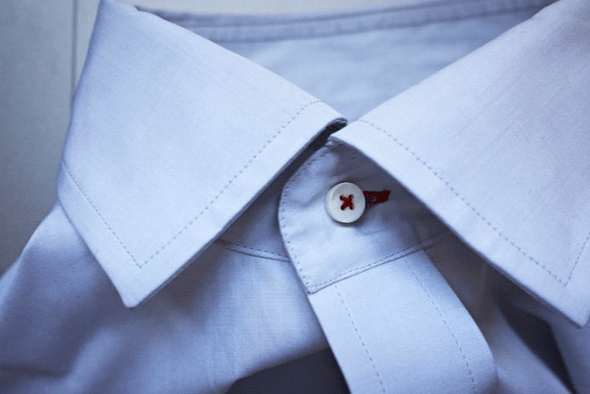
Poplin is a material that is easy to weave light and fine as desired and ideal for everyday wear. Poplin is often used for professional purposes. And what’s more, it’s easy to maintain!
We recognize quality poplin by its silky feel, quite simply. The more its touch makes you think of silk, the more you are on a qualitative material.
To gain a good experience in the hand of a fabric, there is no secret: go to the most upscale boutiques in your city (those where shirts easily exceed 150 €) and touch them. Materials over and over again. I have been saying this for several years.
END TO END
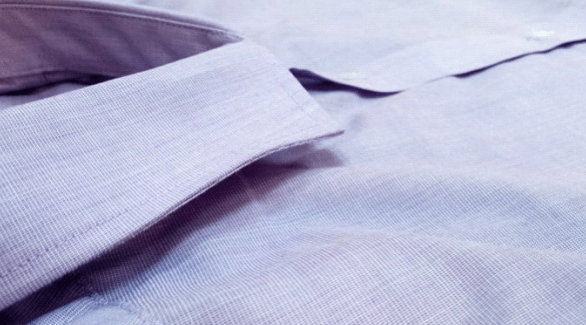
If you like poplin, then you will like end to end, derived from this premiere.
The difference is in the color, because this fabric requires at least 2 colors of thread in order to create a texture. What to give relief to an outfit too simple.
OXFORD
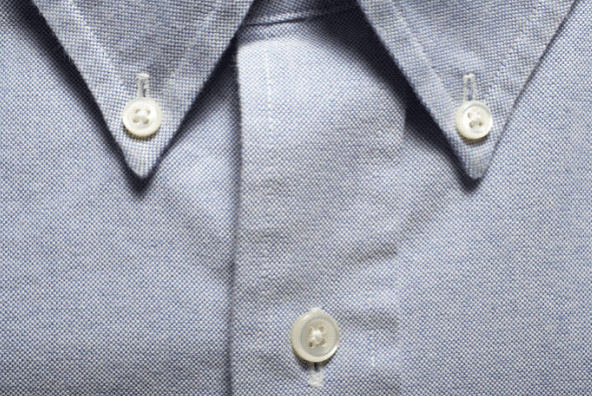
Oxford lends itself to less formal uses.
Its thick weave gives it an interesting checkerboard texture, in addition to guaranteeing a very appreciable robustness. But its particularity is elsewhere: it is made with 2 colored warp threads and 2 white weft threads, hence a slightly two-tone appearance.
The very beautiful oxfords can even be worn with a suit ( Royal Oxford range from Thomas Mason for example).
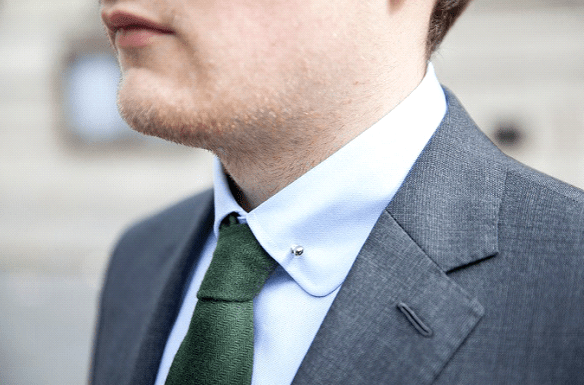
On this Howard’s so-called “pin collar” shirt, the fabric is a Royal Oxford which fits perfectly into a formal outfit.
THE TWILL
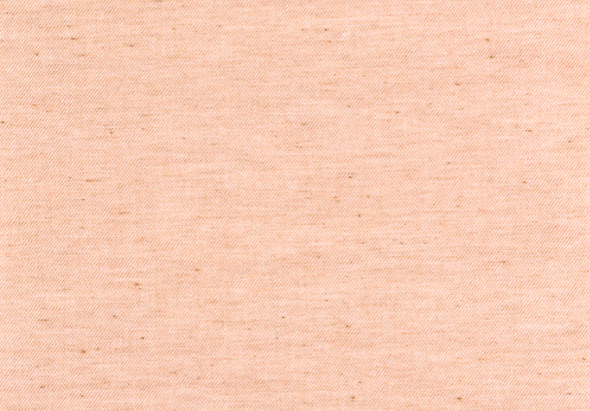
Those of you who are upset with ironing will love the twill, the easiest to iron. It can be recognized by its bias stripes (as on jeans), the result of a process consisting of shifting the weft thread and the warp thread.
Hence a strong and dense fabric. It is often seen on formal shirts.
THE DENIM SHIRT
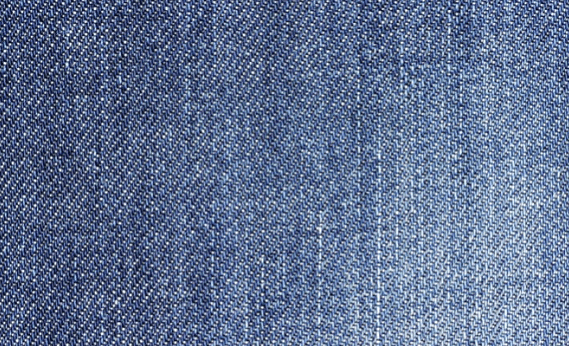
It is now a classic in the men’s wardrobe.
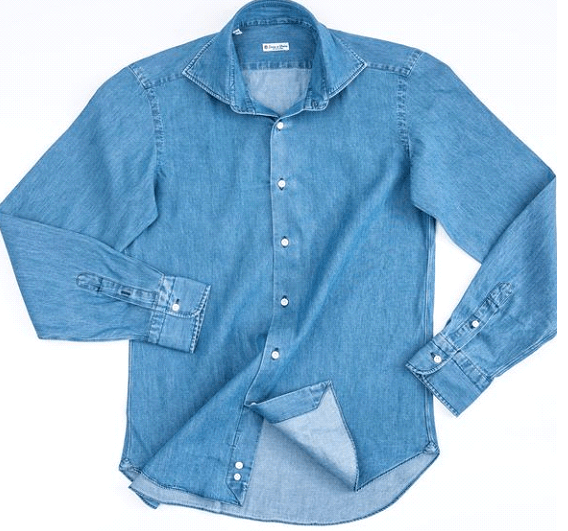
With its typical thickness and matte texture, denim adapts better and better to fitted or even fitted cuts for an elegant and masculine twist.
Note that Italians love to wear it in a very light denim fabric (the same weight as a classic shirt), as a tie and in a suit. It gives very nice outfits!
OTHER FABRICS
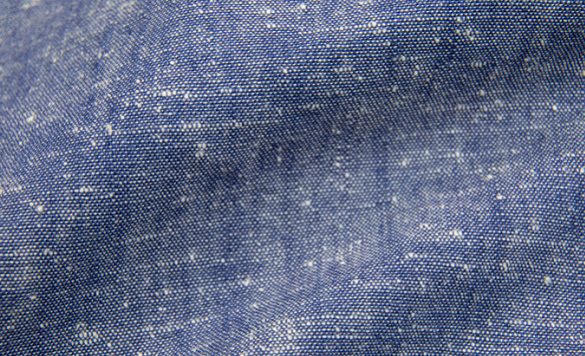
The so-called “shirt weight” fabrics are a rich and varied universe.
These include chambray, pin point, dobby, honeycomb, pique, flannel or even jersey. So many textures to explore once you’re already wearing oxford or poplin.
MAKING A GOOD SHIRT
- THE GENERAL APPEARANCE OF THE SEAMS
Simply, it is important to feel good in the shirt, and not to notice flaws like:
one side larger than the other,
a twisted armhole,
folds that appear because of a seam made askew …
I magnify the line, but it can happen to come across this kind of case.
Two explanations: an assembly error or a shirt which is not adapted to your morphology.
REGULARITY AND PRECISION OF THE SEAM
If a few small imperfections (sometimes witnesses of handmade work) cannot be excluded, a quality garment will stand out for the precision, sharpness and regularity of its seams .
Easy to inspect on a shirt, the stitches must accompany the curves of the piece : straight on a button placket, and nicely rounded on a club collar.
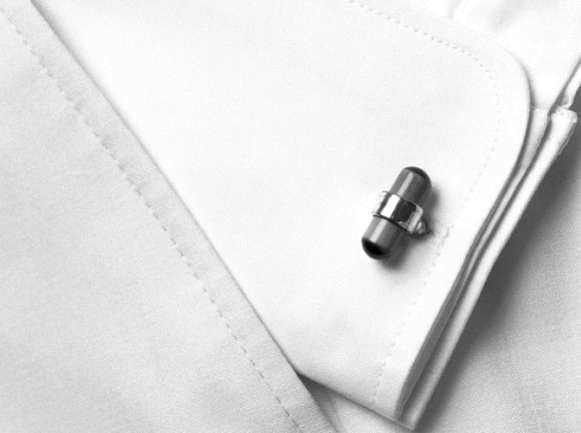
The seam perfectly follows the rounding of the sleeve. In terms of density, we have between 6 and 7 points per centimeter.
FINE STITCHING
As much on certain pieces as jeans it can be interesting to have good big seams, as much on a shirt, one appreciates more fine and close points.
More elegant and allowing a precise and robust assembly of the fabric, the fine stitches will improve the rendering of a shirt. From 5/6 stitches per cm, we have quality. 7 points / cm, that’s the best.
NEEDLE SEAMS OR ENGLISH SEAMS?
If we go into detail, there are two main types of stitching: double needle stitching and English stitching.
DOUBLE NEEDLE STITCHING
The first consists in making two needles cross simultaneously on either side of the fabrics plated one on the other: we therefore have 2 parallel lines of stitches.
Basic and effective, this type of sewing remains however very industrial and much less noble than English sewing.
ENGLISH SEWING
The English seam shows only one seam line.
The inserts are entangled with each other instead of just being plated. More complex, more elegant but also more solid, this type of assembly is clearly the best!
It appeals to purists .
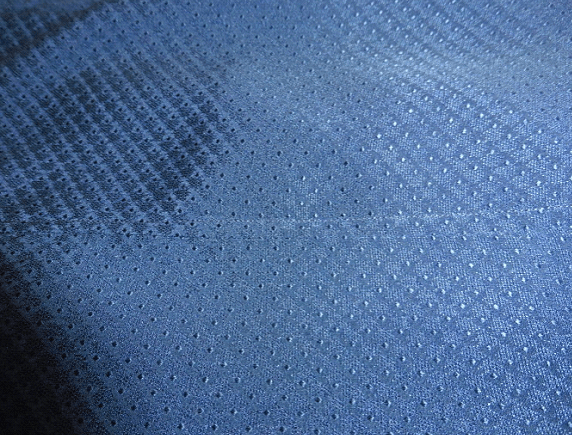
A fine example of fine English couture. There is a seam line, the second being invisible. By the way, note the work of silk, woven to create a false relief … And very comfortable to wear!
THE ARMHOLES OF THE SHIRT
The armhole is a crucial element of a shirt, both in terms of comfort and aesthetics.If the shirt is chosen in the correct size, the armhole seam overlaps the natural break of your shoulder .
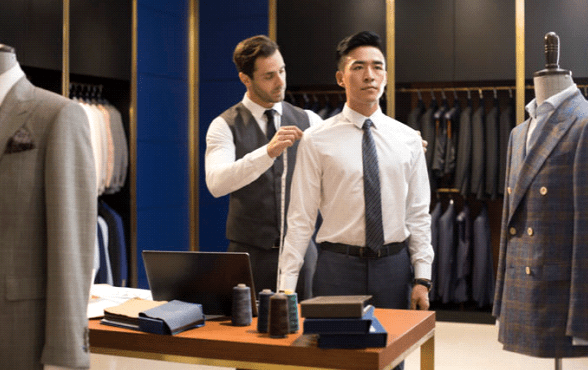
The seam should snap over the shoulder bone.
In the armpit, we often hear that the joint must be perfect and form a cross. This is true in most cases … ready to wear.
However, the panacea of a high-end armhole features an offset seam!

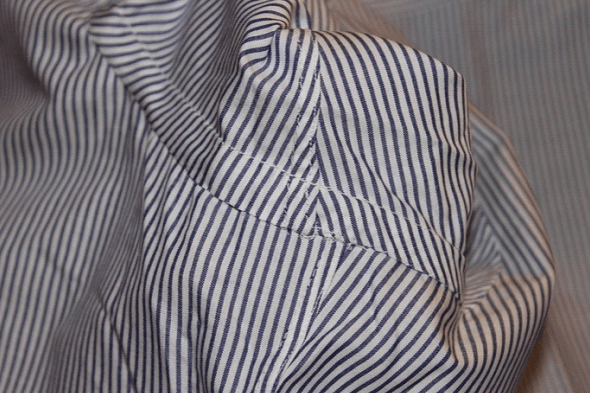
We will therefore see the joints be missing by one or two centimeters. Why ? Simply in order to facilitate the movement of the arm, and to avoid the formation of folds when you move.
Do not expect a radical change in comfort … Very smart will be the one who can make the difference, without looking at the seams. But it’s still a nice detail, only accessible on very high-end products (more than 200 € per shirt, except at Husbands).
THE BACK OF THE SHIRT: A MATTER OF TASTE
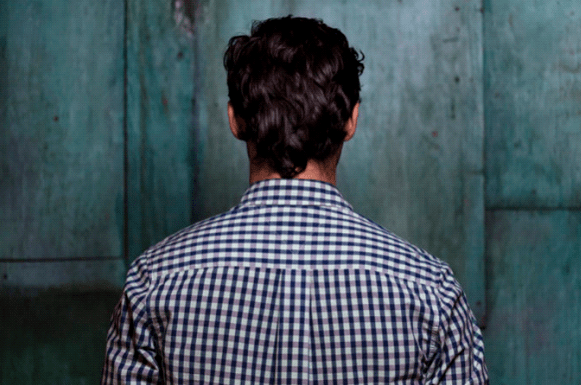
There are different ways to work the back of a shirt, depending on the style and especially the use you want to make of it . Some details make it easier to wear and move around, however they are a little less aesthetic and will complicate ironing.
Others like the darts come to bend the shirt at the level of the kidneys and marry the arch of the back, which is not possible when there is only a bending on the sides … But the seam lines in the dos are not necessarily to everyone’s taste !
A STIFF AND NEAT COLLAR
The collar marks the shirt, gives it its tone, its elegance, its nobility: the collar is sacred!
SOFT NECK SYNDROME
It is the element of a shirt seen first; it must be really crisp, sewn with regularity.
Be demanding on its rigidity because it is out of the question to accept a molasses collar on a formal shirt that will fold as soon as you turn your head.
So unless you are in the presence of casual shirts with sometimes looser collars, make sure you have a perfect outfit and a consistent thickness.
Metal reinforcement ribs (often sewn inside the collar) or plastic (removable) will ideally keep the collar points clear.

COLLAR ASSEMBLY: HEAT-SEALED / FLOATING COLLAR
We often contrast heat-sealed collars with floating collars.
While it is true that a canvas collar is nobler, today we find excellent heat-sealed products with the advantage of being ironed much more easily.
A little trick to recognize them, slide your finger along the neckline starting from the inside towards the tips: if a small fold of fabric forms, you are on a floating collar.

At the base of the collar, this band made up of 3 layers of fabric provides essential support for the collar around the neck.
At the base of the collar, the part in contact with your neck is ideally an interlining, ie 3 superimposed fabric inserts. Providing support and strength to the collar, the interlining will be either woven or heat-sealed, although the last option is the most common and satisfactory in terms of quality.
However, low-end glue will give the interlining an unpleasant cardboard look, and may cause the fabric to blister. It is therefore desirable to keep in mind that this base of the neck, although thick, should not be rigid.
The vast majority of shirts have very satisfying (really) heat-sealed collars. Collars with a free interlining are quite expensive and only exist on shirts at € 250.
If the rendering, the hold and the longevity are incomparable, they require a slightly different technique when ironing, this is what makes its charm. We sometimes notice a kind of very light drape which gives a more natural touch, difficult to explain , at cool . In short, it’s a very “Pitti” detail!
SHIRT CUFFS
It is really possible to make it a personal detail according to the shape you choose, not to mention the common fine embroidery of the initials.
But we’ll cover these styling details later!
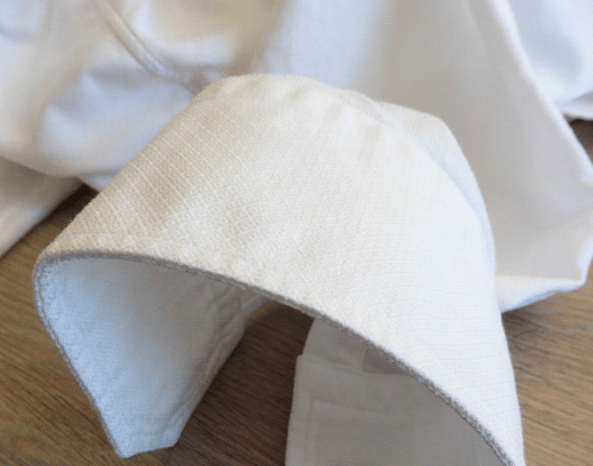
If it can hold up on its own, it’s because the rigidity is optimal!
A good cuff will be rigid enough to keep a nice rounded shape around the wrist, with the seams again very fine and regular. The loop of the button will be finely stitched, and there will be especially no threads protruding in all directions.
At the wrist, you will probably find the famous capuchin placket (which we open to iron the shirt better), and here again we want fine, regular and aligned stitches on the edges, and if possible a reinforcement at the end.
On the very top of the range, we sometimes find trivet’s on the capuchins, these small reinforcements that cannot be done only by hand. In ready-to-wear in USA, to my knowledge, only Husbands and Howard’s offer shirts in very small series with this detail.
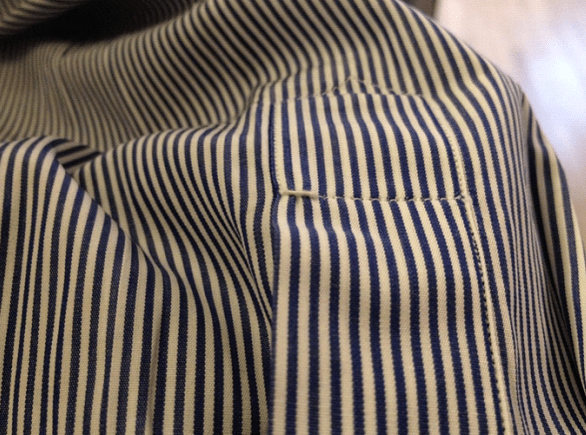
What about fancy sleeve linings? Why not! A few patterns or colors on the inside of the cuff give relief when you roll up the sleeves.
But as always, we make sure that the linings are well sewn. It happens that some linings are slightly longer or cut differently than the outside, which can generate unsightly folds.
REINFORCEMENT SWALLOWS
Sometimes forgotten because hidden inside the pants: the shirt bottoms.
Whether it is a liquate bottom (rounded bottom), straight or simply split, do not neglect the quality of the cut and the seams mentioned above.
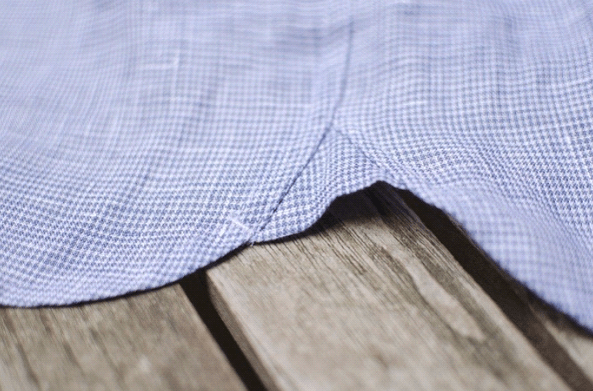
Without forgetting, especially for the liquate stockings, the essential swallow: this small fabric reinforcement, often tone-on-tone, protects the joints of the back and front yokes, avoiding tears associated with wearing.
This is all the more important in the case of a shirt that you will wear without tucking it into the pants, and which would be adjusted: as soon as you sit down, all the tension of the movement is transferred to this fragile place.
PRETTY BUTTONS IN NATURAL MATERIALS
The finest brands of shirts use real mother-of-pearl.
And if putting the button in question on your lips to see if it is really cold is not necessarily very elegant, find a corner to do it discreetly because it is an effective test to recognize real mother-of-pearl.
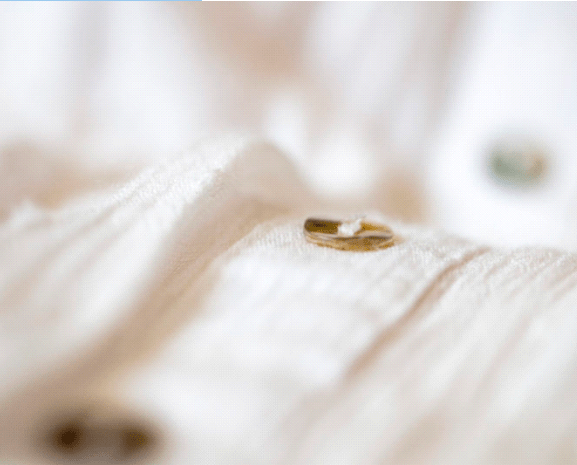
As mother-of-pearl, there is the Mother Pearl (the Roll’s), the Shell River and the troches. This kind of information is not really accessible to the basic consumer, but note that the thicker the mother-of-pearl button, the whitish the reflection, and the more you are on high-end mother-of-pearl.
But I remind you that beautiful plastic buttons are also very good, they are less brittle, and it avoids paying a fortune for this shirt!
Regarding the type of sewn, it is true that buttons sewn in a cross or crow’s feet are stronger than those sewn in parallel.
However, as always, if a seam (of any type) seems sturdy and made with a strong thread, no need to ask yourself more questions.

THE AESTHETIC ELEMENTS OF THE MEN’S SHIRT
THE DIFFERENT STYLES OF CUTS
Roughly speaking, there are 3 major cuts.
THE FITTED CUT
The fitted cut is the one that will enhance the shoulders and torso the most in the spirit of a V.
To do this, we will “hollow out” the sides and restrict the amplitude of the armhole: thus cut, the shirt reduces the volume of the bust to accentuate that of the torso and shoulders.
Obviously, this kind of cut forgives absolutely nothing when it comes to love handles!

On the other hand, be careful not to fall into the too much: it is not necessarily elegant or comfortable to be molded in your shirt … we have all already seen these buttons in great distress ready to explode. So if it can be very rewarding to emphasize the masculine curves of the bust, be careful not to choose the shirt that is too tight, and therefore too small.
They are not recommended for sturdy men, or too thin: the bending will accentuate unsightly volumes. And we all know how risky it can be to wear a poplin shirt too close to the body in summer, for example…
As soon as there are large star folds around the buttons, and the shirt opens a little on the chest, the shirt is too small!
ADJUSTED CUTS

The fitted cut shapes the bust and enhances the shoulders, while still being more comfortable and more suitable for movement.
This is the cut that we recommend.
Being able to benefit a very large number of morphologies, it is also more comfortable than the arched and more elegant than the straight.
Its cut is slightly closer to the sides without going so far as to tackle them and therefore also allows the shoulders to be highlighted.
The fitted cut also has the advantage of not hindering movement and lets a little air circulate between the skin and the fabric, which is particularly appreciable during hot temperatures, stress or simply in a party!
THE STRAIGHT CUT

The straight shirt had very good days in the 80s / 90s, periods during which fashion (it still existed at that time) gave pride of place to monstrous volumes, whether it was for suits, jeans or shirts.
But today, it seems completely outdated. Not very advantageous for anyone, it often creates a float around the torso far from elegant…
On the other hand, it can be found as a strong piece either in a vintage spirit, or at certain street wear designers or lovers of exaggerated volumes.
https://www.onlinehealthpills.co.uk/
 Happy Fashion Blog